
Cleaning Leather: A Guide for Holsters & Beyond
Sep 11th 2026
Leather Care Starts with Understanding the Material
Leather responds best to gentle, consistent attention that removes dirt while preserving its structure and retention properties.
At a Glance:
- Regular cleaning with a damp cloth or mild cleaner prevents buildup that hardens and cracks leather fibers.
- Holsters require special care: avoid saddle soaps, oils, and dressings that soften molded leather and reduce retention.
- Spot test any product in an inconspicuous area first.
- Dry at room temperature away from direct sunlight and heat sources.
- The same principles apply to leather jackets, boots, furniture, seats, and gloves with adjustments for finish and use.
- Proper cleaning and limited conditioning can extend the usable life of premium leather goods by 40 to 60 percent, according to industry research on leather care products.
Leather remains a preferred material for holsters and everyday items because it molds to the user, develops a unique patina, and provides a natural feel that synthetic alternatives often lack. This guide walks through why cleaning matters, a step-by-step process illustrated with the DeSantis Speed Scabbard, suitable product types, and broader applications.
Why Cleaning Leather Matters for Holsters and Everyday Items
Dirt, sweat, skin oils, and environmental grit accumulate on the leather surface and work into the fibers, accelerating drying, cracking, and loss of shape.
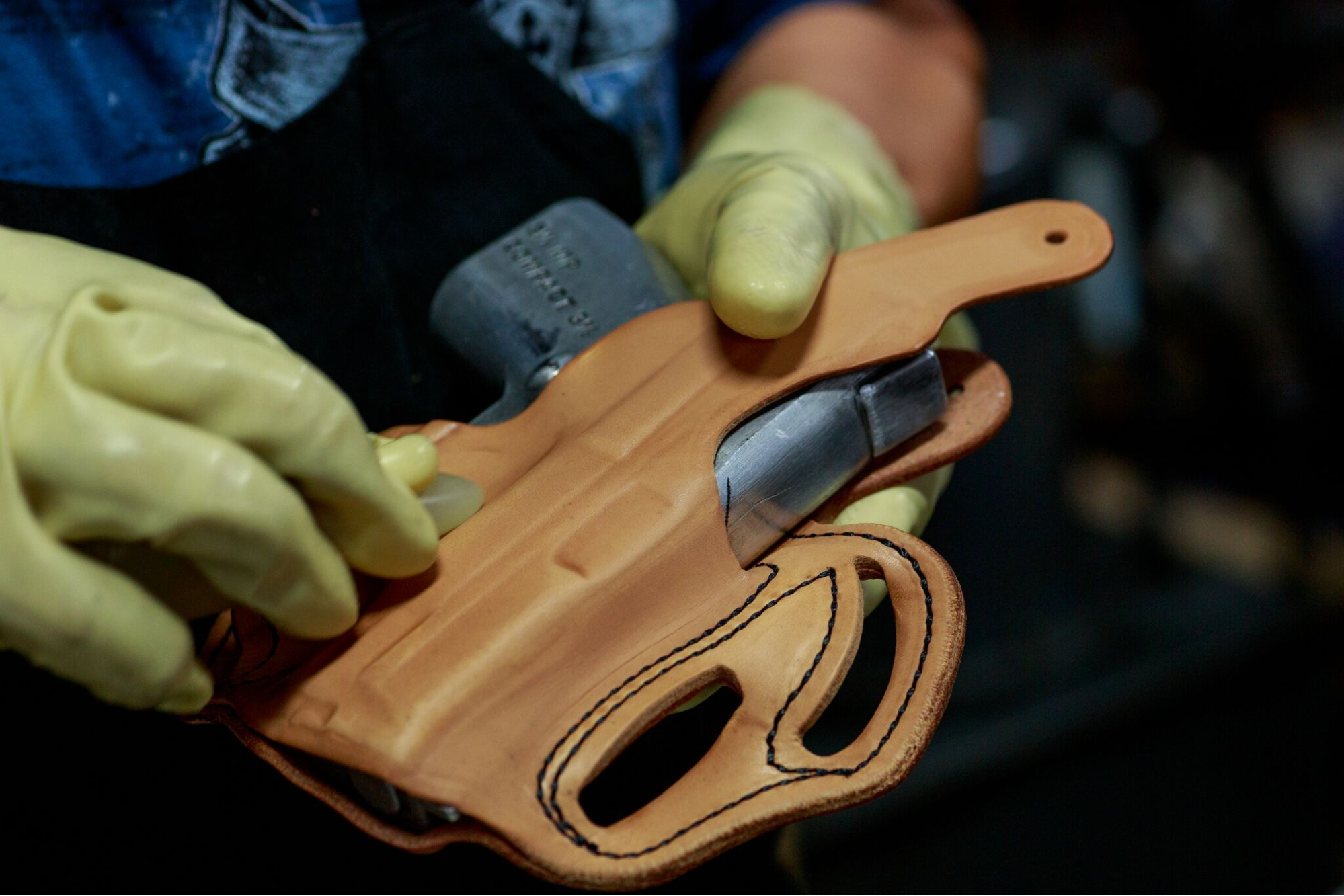
For a molded leather holster such as the Speed Scabbard, neglected grime can affect the precise fit and tension that keep the handgun secure. Research on leather care shows that regular cleaning and protection routines help premium leather goods last substantially longer, with reported extensions of 40 to 60 percent in serviceable life. On furniture, jackets, boots, or car seats, the same buildup leads to stiffness, discoloration, and surface failure. A light routine of wiping with a clean, dry cloth or dampened cloth after use, followed by deeper cleaning as needed, keeps the protective layer intact and the leather fibers flexible without over-softening.
What Makes Leather Worth Maintaining
Leather’s natural oils and fiber structure give it strength, breathability, and the ability to conform over time, qualities valued in holsters, jackets, gloves, boots, and upholstery.
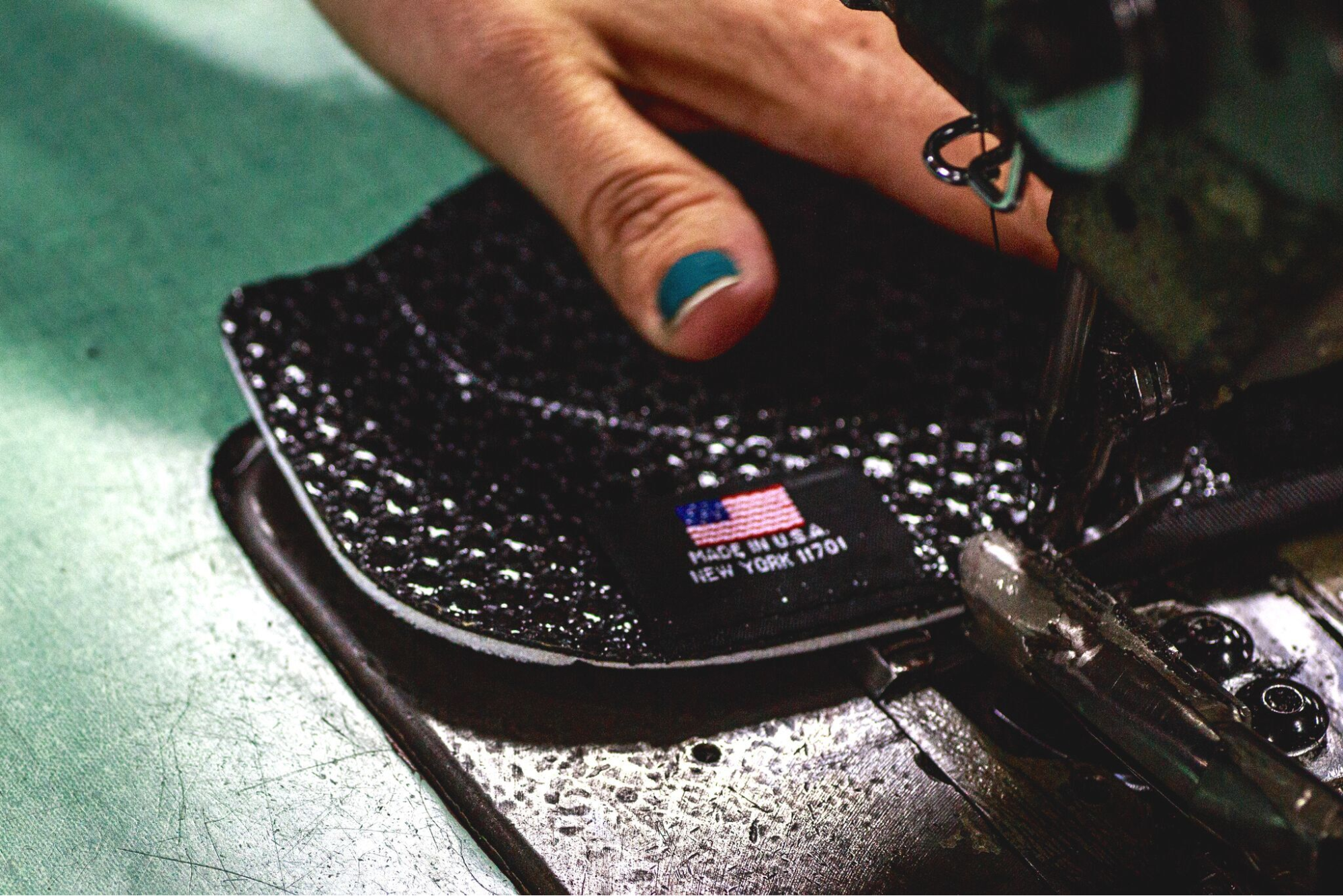
Full-grain and smooth leather develop character with use while remaining strong when cared for correctly. Aniline leather and similar finishes show more of the natural surface and therefore need gentler treatment. In contrast to many synthetics, quality leather can be cleaned and maintained for years rather than replaced. DeSantis has built its reputation on American-made, hand-crafted leather holsters for more than 50 years, starting from Gene DeSantis’s kitchen-table work and expanding to serve professionals worldwide. Readers comparing materials can find additional perspective in the company’s Leather or Kydex Holster guide.
Step-by-Step Process for Cleaning a Leather Holster
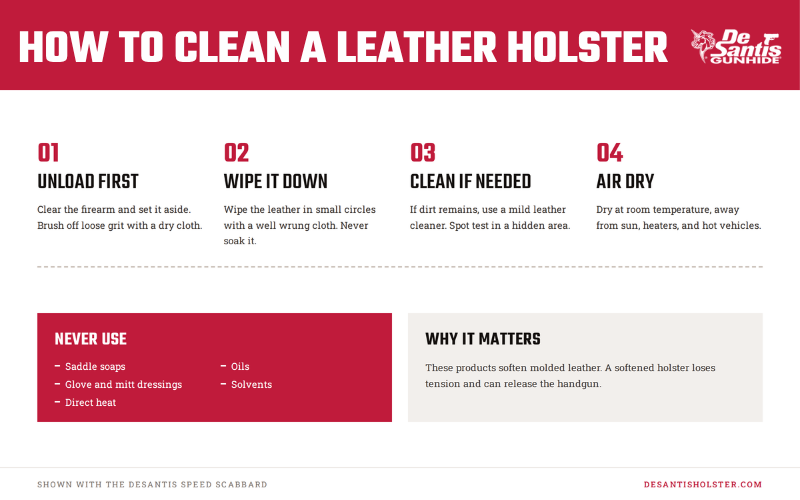
Unload the firearm, set it aside securely, and begin with dry removal of loose debris before any moisture touches the leather.
- Brush or wipe the exterior and interior with a soft, dry cloth or soft-bristled brush to lift dust, lint, and dried particles. Pay attention to seams, belt slots, and the mouth of the holster.
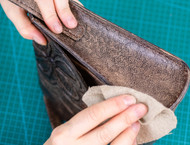
- Prepare a slightly dampened cloth using clean or distilled water at room temperature. Wring it thoroughly so it is damp, not wet. Wipe the leather surface in a gentle circular motion. For light soiling, this step is often enough.
- If more cleaning is required, apply a small amount of mild cleaner formulated for leather to a soft or lint-free cloth. Work in circular motions over small sections. Avoid saturating the leather.
- Wipe away residue with a clean, damp cloth, then immediately follow with a clean, dry cloth to absorb remaining moisture.
- Allow the holster to air-dry completely at room temperature, away from direct sunlight, radiators, hair dryers, or hot vehicle interiors. Shape retention can be supported with a blue gun or similar inert form if needed.
- Inspect the tension screw (present on most Speed Scabbard models) and hardware once dry. Confirm the holster still holds the unloaded handgun securely.
This sequence works for the Speed Scabbard, an open-top OWB leather holster that relies on precise molding and an adjustable tension device rather than a thumb break. The same basic steps scale to other smooth leather items.
Products and Approaches for Different Leather Needs
Choose mild, pH-balanced options and always perform a spot test in an inconspicuous area before treating the entire item.
| Approach | Suitable For | How to Use | Notes for Holsters |
|---|---|---|---|
| Clean dry cloth or soft brush | Daily dust and light debris on any leather | Wipe or brush following the grain | Preferred first step for DeSantis holsters |
| Damp cloth with clean or distilled water | Light soiling on smooth leather, jackets, boots, furniture | Wring well; wipe then dry immediately | Safe when moisture is minimal |
| Mild leather cleaner or glycerine soap solution | Moderate grime on finished leather | Apply sparingly to cloth; circular motion; rinse residue | Test first; avoid heavy lather |
| White vinegar diluted with water (1:4 or milder) | Occasional odor or mild mold on some items | Spot treat only; dry thoroughly | Not for routine holster use |
| Leather conditioner (sparingly) | Dry-feeling jackets, boots, furniture, seats | Thin layer on soft cloth after cleaning and full drying | Do not use oils, saddle soaps, or mitt/glove dressings on DeSantis holsters |
Important safety note for DeSantis products: Saddle soaps, oils, or mitt and glove dressings should not be used on DeSantis holsters. These products shorten useful life and increase the possibility of accidental loss of the handgun. Stick to dry wiping, minimal moisture, and manufacturer-aligned mild cleaners. Harsh chemicals, nail polish remover, and household solvents strip natural oils and damage the leather surface.
Extending the Method to Other Leather Items
The core process of dry removal, limited moisture, mild cleaner if needed, thorough drying, and occasional light conditioning applies across leather jackets, gloves, boots, furniture, couches, upholstery, and steering wheels, with adjustments for thickness and finish.
Leather furniture and seats benefit from more frequent dusting and less aggressive cleaning because of larger surface area and constant contact. Boots and jackets that flex regularly may need conditioning every few months in dry climates to replenish natural oils, while a holster prioritizes shape retention over softness. Always store items away from direct sunlight and extreme temperature swings. For additional reading on carry choices that pair well with leather, see DeSantis resources on 1911 holsters and EDC basics.
Common Mistakes That Shorten Leather Life
Over-wetting, heat drying, harsh chemicals, and over-conditioning are the most frequent causes of premature failure.
Never soak leather or leave it wet. Heat from direct sunlight, dashboards, or forced-air sources causes shrinkage and cracking. Products that soften the leather compromise molded retention on holsters. Skipping the spot test risks permanent discoloration on aniline or sensitive finishes. Consistent light care outperforms infrequent heavy treatments.
Putting It All Together
A simple routine of wiping after use, deeper cleaning when dirt appears, and careful drying keeps leather holsters and other leather goods performing as intended for years.
The Speed Scabbard illustrates how quality American-made leather, precise molding, and proper maintenance deliver reliable everyday carry. When you are ready to add or replace a leather holster, explore the full selection of DeSantis leather holsters and experience the craftsmanship that has defined the brand for more than five decades.
