
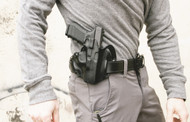
What Does EDC Stand For? Your Guide to Carrying
Apr 23rd 2026
The Basics Every Carrier Should Know
Three letters show up constantly in gun forums, gear reviews, and concealed carry communities. Here is what they mean and why they matter.
At a Glance:
- EDC stands for "everyday carry" and refers to the items a person carries on their body or close at hand on a daily basis
- EDC gear typically includes a firearm, holster, knife, wallet, keys, and a flashlight at minimum, but varies from user to user
- A well-built EDC setup prioritizes reliability, accessibility, and comfort for daily use
- Holster choice is one of the most personal and consequential decisions in any EDC system
- DeSantis GunHide has been manufacturing American-made holsters for over 50 years, purpose-built for concealed carry
EDC is shorthand for "everyday carry," and it describes the collection of tools and personal items a person brings with them every day. For those who carry a firearm, it goes well beyond a pocket knife and a slim wallet.
What EDC Actually Means
The term "everyday carry" originated in the gear and preparedness community and has grown into a full culture in recent years, particularly in the United States. At its core, EDC is about intentionality. Rather than grabbing whatever is nearby, EDC enthusiasts put thought into every item they carry, why they carry it, and how it fits into a reliable, functional system.
The concept applies broadly. Someone's EDC kit might include:
- A firearm and holster
- An EDC knife or pocket knife
- Keys and a slim wallet
- A compact flashlight or high-quality EDC flashlight
- A cell phone
- A small first aid kit
- A pocket notebook
- A water bottle if carrying an EDC bag
Every item earns its spot. If it does not serve a purpose in everyday life, it does not make the cut.
EDC and the Firearm Carrier
For those who carry a firearm, the gun is usually the centerpiece of the entire EDC setup. Everything else gets built around it. The holster, the belt, the clothing choice, and even the wallet placement all take the firearm's position and accessibility into account.
This is where EDC becomes more than a hobby. Carrying a defensive tool on a daily basis means thinking through retention, concealment, draw speed, and comfort across hours of wear. A setup that works great for thirty minutes at a range does not always translate to eight or ten hours of daily use.
The right EDC system for a firearm carrier includes:
- A reliable holster matched to the specific handgun model
- An EDC belt built to support the weight of a firearm and accessories
- Consistent carry position so muscle memory develops over time
- Regular practice with the actual setup being carried
- Awareness of local carry laws and permit requirements
Personal preference plays a large role here, but the fundamentals do not change. The gear needs to work every time, without adjustment or second-guessing.
Matching the Holster to the Carry Style
DeSantis offers holsters across every major carry style, so the right match comes down to how and where the firearm gets worn throughout the day. A few starting points worth browsing:
- Inside-the-Waistband (IWB) Holsters — the most common choice for concealed daily carry, tucking between the pants and body for maximum concealment
- Outside-the-Waistband (OWB) Holsters — worn on the belt for faster draws and all-day comfort, typically paired with a cover garment
- Pocket Holsters — a discreet option for smaller pistols and revolvers that breaks up the firearm's outline and keeps it oriented for a clean draw
- IWB/OWB Convertible Holsters — versatile designs that work both inside and outside the waistband as the day demands
Whichever style fits the carry routine, pairing the holster with a purpose-built EDC belt keeps the setup stable, comfortable, and consistent hour after hour.
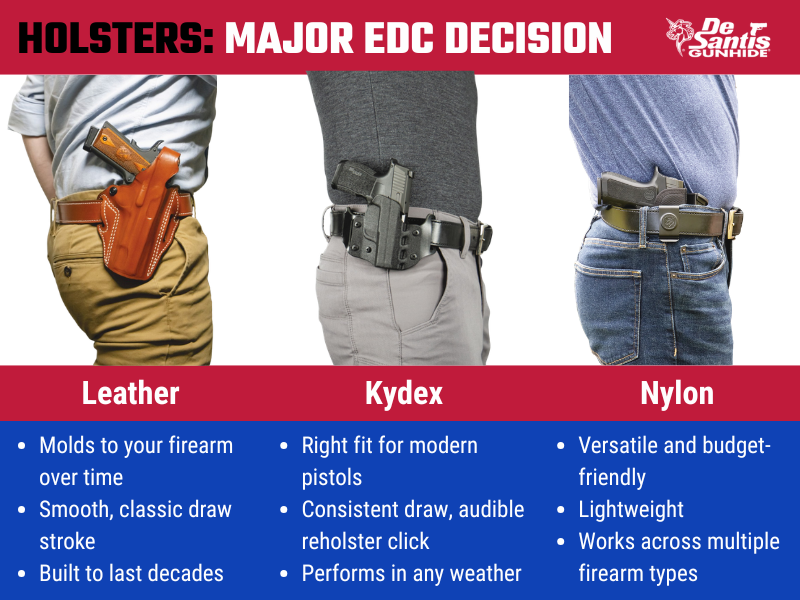
The Holster: The Most Important EDC Decision
Of all the items in an EDC kit, the holster deserves the most attention. A firearm sitting in a poorly made holster is both a safety risk and a comfort problem. The right holster keeps the gun secure, allows for a clean draw, and stays put throughout the day.
There are three primary holster materials used in the EDC community:
Leather
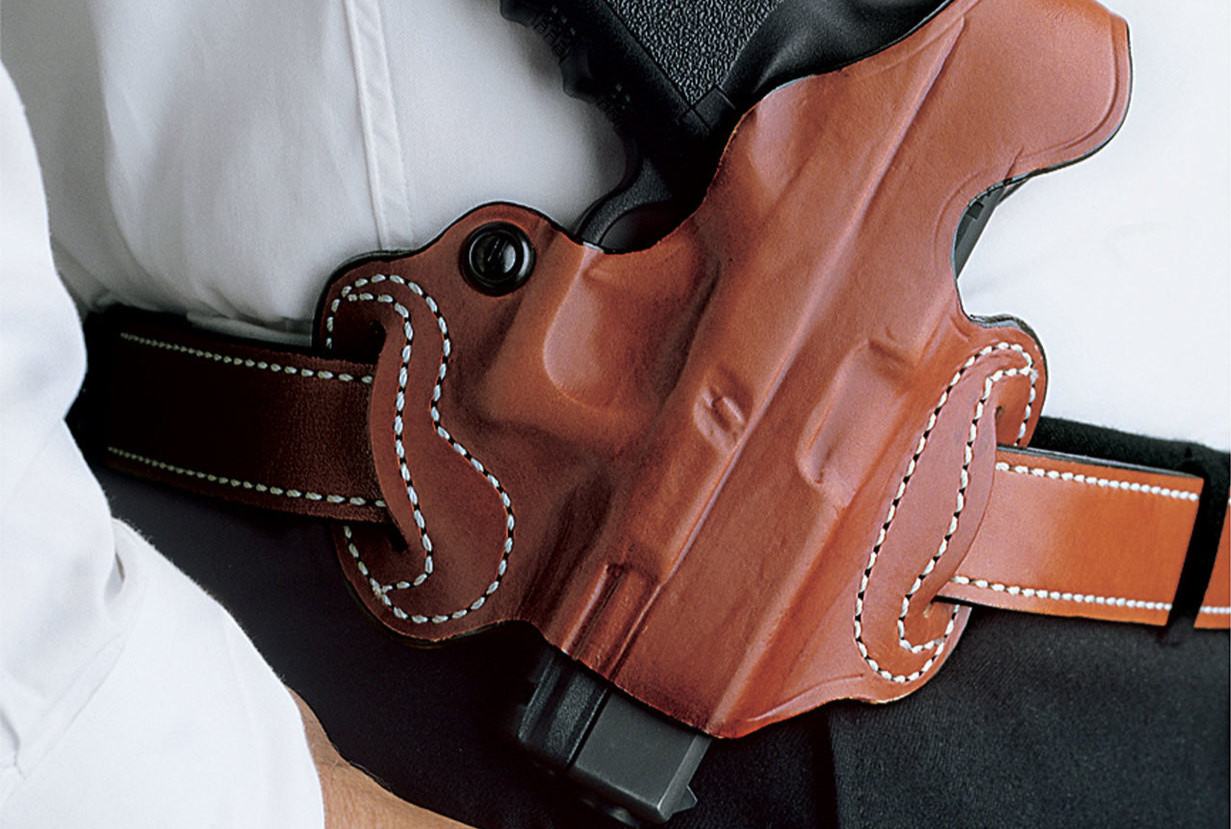
Leather holsters have been the standard for over a century, and for good reason. A well-crafted leather holster molds to the firearm over time, offers a smooth draw, and holds up to years of daily use. DeSantis GunHide has been building leather holsters since the company's founding, and their leather work remains some of the most recognized in the industry.
Kydex
Kydex is a thermoplastic material that offers a precise, custom fit for specific firearm models. It does not flex, holds its shape in all conditions, and provides an audible click on reholstering. For carriers who prioritize retention and a consistent draw stroke, Kydex is a strong choice. DeSantis has expanded their Kydex lineup significantly, and their Kydex holsters bring the same attention to detail as their leather work.
Nylon
Nylon holsters offer versatility and a lower price point. They work well for general use and casual carry, and DeSantis offers nylon holsters for those who want a dependable option at an accessible price.
Building a Practical EDC Setup
There is no single right answer for what goes into an EDC system. A person working outdoors in a rural area has different needs than someone commuting in a city. The goal is to build a kit that handles the scenarios most likely to come up in your everyday life.
A few principles worth following:
Start with What You Actually Need
Carrying gear for every possible scenario leads to an overloaded, uncomfortable setup. Focus on what you realistically use on a daily basis and build from there.
Prioritize Quality Over Quantity
A few well-made items outperform a bag full of cheap ones. Durable materials and solid construction matter when tools are used repeatedly under real conditions.
Practice with Your Step Regularly
Gear that sits unused is gear that will let you down. Whether it is a high-quality EDC flashlight during a power outage or a defensive tool in a high-pressure moment, everything in your carry kit should be something you have used enough to rely on.
Keep it Consistent
Changing up your carry position, holster type, or firearm frequently makes it harder to develop the muscle memory that effective EDC requires. Find what works and stick with it.
The EDC Community and Culture
What started as a practical approach to personal preparedness has grown into a dedicated community. EDC enthusiasts share their setups online, debate the merits of different pocket tools and EDC knives, and help new carriers find their footing. Forums, social media groups, and YouTube channels are dedicated entirely to everyday carry culture.
The community tends to value:
- American-made gear and tools built to last
- Handmade with attention to detail
- Products that have been tested in real conditions, not just marketed well
- Brands with a genuine history in the industry, not just a logo and a web presence
DeSantis fits that profile. Founded over 50 years ago at a kitchen table by Gene DeSantis, the company grew from handmade beginnings into one of the largest holster manufacturers in the world. Their products are carried by civilians, law enforcement, and military personnel across the globe. Every holster is still made in the United States, by hand, with the same standards that built the brand's reputation.
Leather vs. Kydex: Which Is Right for Your EDC?
This is one of the most common questions in the EDC community, and there is not a universal answer. Both materials have a place depending on carry style, climate, and personal preference.
Choose leather if:
- You prefer a holster that conforms to your body and breaks in over time
- You want a classic look and feel that holds up for decades
- You are carrying a firearm with a traditional profile
Choose Kydex if:
- You want a rigid, moisture-resistant holster that performs the same in any weather
- You carry a modern polymer-framed pistol and want a precise fit
- You prioritize a consistent, audible draw and reholster
Many experienced carriers own both and rotate based on season, clothing, or carry position. The important thing is that whichever material you choose, the holster is purpose-built for your specific firearm.
DeSantis offers both, along with a full range of carry positions including IWB holsters, OWB holsters, shoulder holsters, and pocket holsters to cover every carry style in your EDC system.
Build Your EDC Around a Holster That Works
EDC stands for everyday carry, and the firearm carrier's version of it starts with a holster that earns its place every day. The gear you carry should work without thinking about it, hold up to years of use, and fit the way you actually live.
DeSantis GunHide has been building holsters for serious carriers since 1972. Every product is handmade in the United States, designed for specific firearm models, and backed by over five decades of craftsmanship. Browse our full lineup and find the holster that completes your EDC setup.
