
How to Hold a Pistol: The Grip That Steadies Every Shot
Oct 1st 2026
The Grip in Brief
A pistol is held two ways that matter: by your hands when you shoot it, and by your holster when you do not.
At a Glance:
- A high, two-handed grip with the web of your dominant hand pressed into the backstrap gives you the most control.
- Your support hand fills the open space on the grip and does most of the work managing recoil.
- The pad of your trigger finger presses straight back, and your finger stays off the trigger until your sights are on target.
- A solid, even grip and a square stance tame muzzle flip and speed up follow-up shots.
- Common mistakes like the teacup grip, a loose grip, and limp wristing cause both misses and malfunctions.
- A holster that covers the trigger guard holds the pistol safely and lets you build the same grip on every draw.
How you hold a pistol decides more about your accuracy than the gun, the sights, or the ammo you feed it. Grip is the one fundamental that touches every shot, and it is the easiest to get wrong without noticing.
Why Your Grip Matters More Than Your Gun
Grip is the foundation of every accurate shot, because it controls recoil, steadies the sights, and keeps the pistol running. About 32% of U.S. adults own a firearm and many are new to it. Nearly 47% of first-time buyers asked about training, and grip is lesson one.
A shaky or uneven hold sends rounds off target and, on a semi-automatic pistol, can keep the slide from cycling. Get your hand placement right first and everything downrange, from target shooting to self defense, gets easier. The grip is also the cheapest upgrade you can make, since it costs nothing but reps.
How to Hold a Pistol, Step by Step
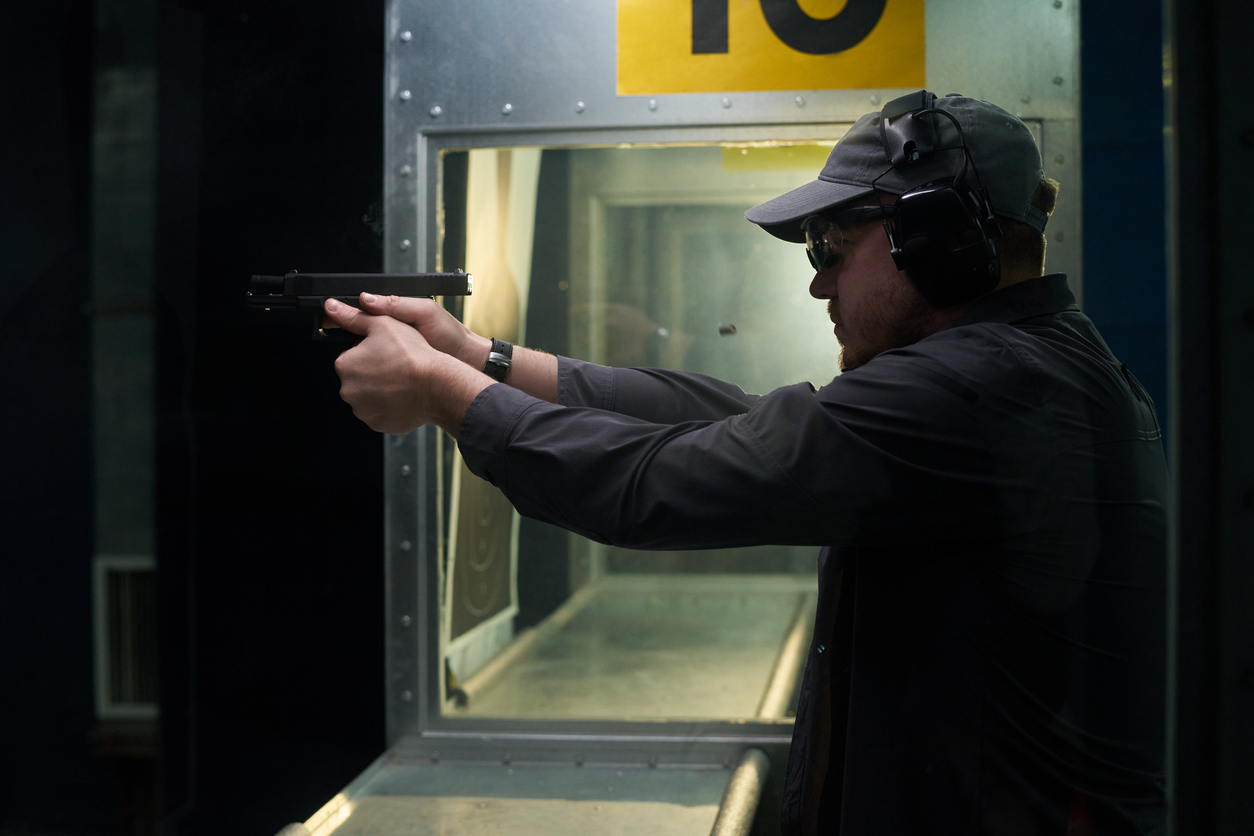
Build your grip from the dominant hand up. Seat the web of your shooting hand as high on the backstrap as it goes, wrap your middle, ring, and little fingers around the frontstrap, and keep your trigger finger straight along the frame. Then bring in the support hand to fill every open space. The NRA describes the two-handed grip as steadier for aiming and better at absorbing recoil than one hand alone.
Your support hand does the heavy lifting. Rotate it forward so the heel of the palm covers the exposed grip panel, then press its fingers into the gaps left by your shooting hand. Any open space lets recoil move the gun in your hand, which is why filling every gap matters. Here is the sequence:
- Pick up the pistol behind the muzzle with your support hand, then set your dominant hand high on the backstrap.
- Wrap your bottom three fingers firmly around the front of the grip and keep the trigger finger off the trigger.
- Bring your support hand in at an angle and press its fingers into the empty spaces on the grip.
- Point both thumbs forward, parallel to the slide, with the dominant thumb over the support thumb.
That last step is the thumbs-forward grip, which some call the standard for semi-automatic handguns because it maximizes skin on the frame for both hands.

Trigger Finger and Trigger Control
Trigger control starts with where your finger lands. Place the pad, the center of your fingerprint whorl, flat on the face of the trigger, then press straight back without disturbing your sight alignment. Too little finger tends to push shots one way, and too much finger pulls them the other, so consistency is the goal.
GUNS Magazine defines the pad as the center of the fingerprint whorl, the spot that lets most hands pull straight back. Just as important is when your finger touches the trigger. Keeping your trigger finger off the trigger and outside the trigger guard until your sights are on target is one of the cardinal rules of firearm safety. Rest the index finger along the frame until you decide to fire, and keep your eyes on the front sight, level inside the rear sight notch, as you press.
Grip Pressure, Recoil, and Follow-Up Shots
A firm, consistent grip is what turns recoil into fast follow-up shots. Hold the pistol tightly enough that it does not shift in your hands, with the support hand applying more pressure than the shooting hand, but not so tight that your hands tremble. The thumbs-forward hold then drives the muzzle back down between shots.
Shooting Illustrated notes that the thumbs-forward grip delivers recoil management for faster follow-up shots. A high grip that sits close to the bore line shortens the lever the pistol works against, which cuts muzzle flip and keeps your sights near where they started. Better recoil control means less time re-aiming and more rounds on target, whether you are punching paper or training for self defense.
Stance: Isosceles vs Weaver
Your stance is the platform your grip stands on. The two most common are the Isosceles, with arms extended and shoulders square to the target, and the Weaver stance, a bladed posture with bent elbows and push-pull tension between the hands. Most modern instructors lean toward the Isosceles for its simplicity under stress.
| Stance | How It Works | Strengths | Trade-offs |
|---|---|---|---|
| Isosceles | Arms extended straight, shoulders square to the target | Natural under stress, strong recoil control | Less stable to the sides |
| Weaver | Bladed body, elbows bent, push-pull tension between the hands | Steady for slow, precise fire | Harder to move, blind spot on the support side |
Either way, lean slightly forward from the waist so your body, not your wrists, absorbs recoil. The Isosceles squares you to the target while the Weaver mimics a fighting stance. The right stance is partly personal preference, and new shooters should try both at the shooting range before settling in.
Common Grip Mistakes to Avoid
A few repeat mistakes rob new shooters of accuracy and can jam a semi-automatic pistol. The most common are the teacup grip, limp wristing, and gripping too low on the frame. Each one leaves the pistol under-supported and free to move during the shot.
- The teacup grip rests the shooting hand in the open palm of the support hand, which the NRA notes offers no real support.
- Limp wristing, a loose hold with a soft wrist, lets recoil ride the gun and can cause a semi-automatic to malfunction and jam.
- Gripping too low on the backstrap surrenders leverage and lets the muzzle climb between shots.
- A death grip makes your hands shake, while too loose a grip lets the pistol shift, so aim for firm and steady instead.
How the Right Holster Helps You Hold It Better
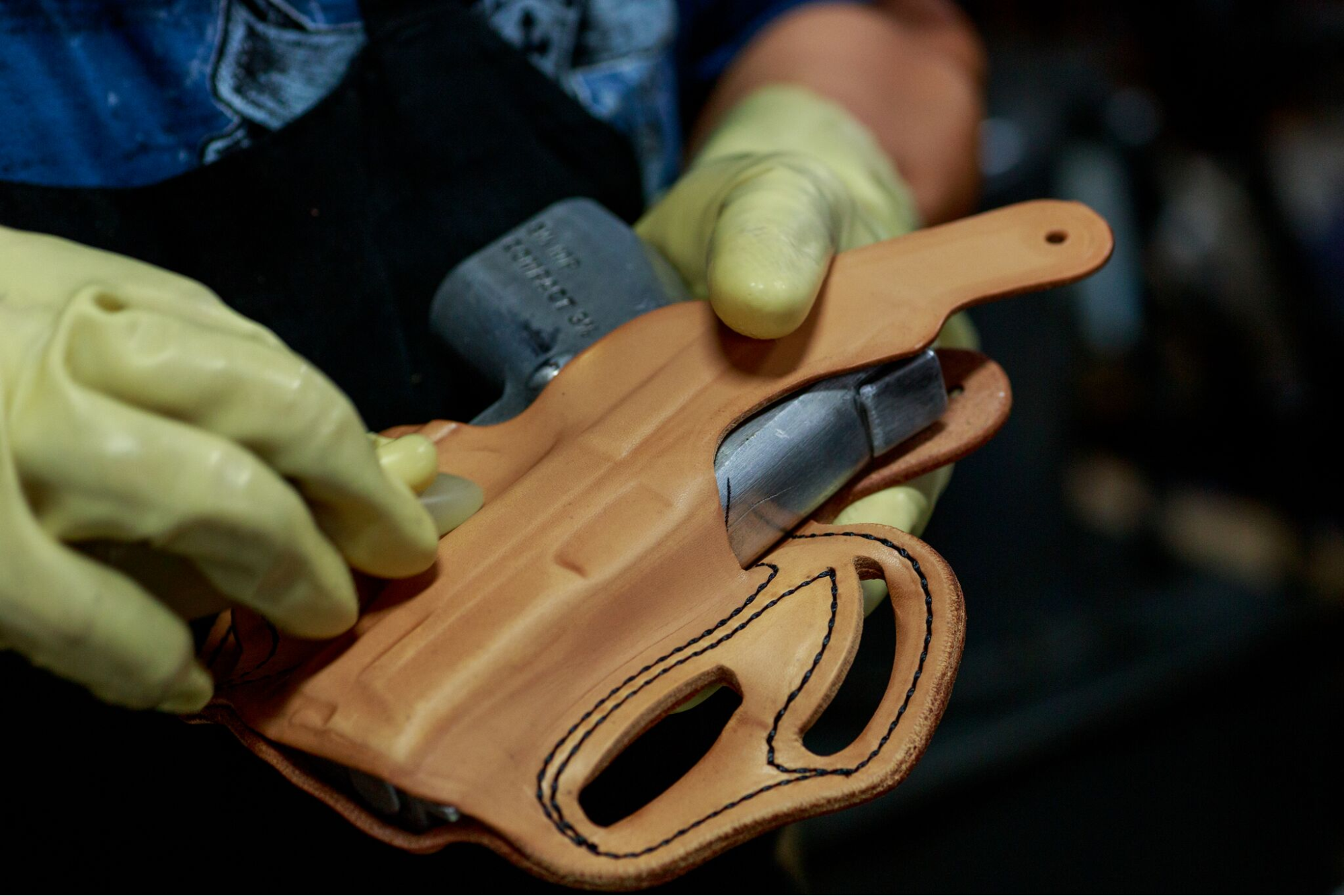
A holster holds your pistol two ways: securely when you are not shooting, and in the same position every time so you can build a full grip before the draw. A quality holster covers the trigger guard, retains the firearm through movement, and presents the grip at a consistent angle, which is where a clean, repeatable draw begins.
Concealed carry rewards a holster molded to the exact pistol. The Intruder pairs a Kydex shell with a steer-hide back for an inside-the-waistband fit that keeps a concealed pistol tight to the body and the grip easy to reach. For open carry, range days, and law enforcement officers on off-duty wear, the Quick Trax is a Level I retention Kydex holster with a thumb release that lets you take a full firing grip and draw fast, with the gun staying put until you want it to move.
If you carry both ways, the Complete Package bundles a Kydex holster with a leather one so your grip stays consistent from concealment to the range. Leather softens to the body over time, while Kydex holds its molded shape and re-holsters the same way on every rep. For picks sorted by comfort, send readers to the most comfortable concealed carry holsters roundup.
Grip It, Draw It, Then Practice
Holding a pistol well comes down to a high two-handed grip, a straight trigger press, and a stance that lets your body soak up recoil. Put in the reps with an unloaded pistol at home, then confirm the grip with live ammo at the range. The right holster ties it all together by protecting the trigger guard and setting up the same grip on every draw.
DeSantis Gunhide has hand-built American holsters in the United States since 1972, family-owned, with quality control as the priority behind every stitch and rivet. Shop pistol holsters with DeSantis and give your grip a head start.
