

Carrying for Miles: Best Holster for Running Safely
Nov 5th 2026
Before You Hit the Pavement
Here is the smart way to carry on the move, at a glance:
- The Gunny Sack belt pack is the top pick for most runners because it hides your pistol at the waist and holds it steady with a Velcro-access, elastic-retention fit while you move.
- The Nemesis pocket holster and most IWB holsters round out the field for different run lengths and gun sizes.
- A good running holster covers the trigger guard completely, grips the gun with a secure fit, and uses sweat-friendly materials.
- Shorter runs pair well with pocket or IWB carry, while a long run is easier with a waist setup that conceals the gun and keeps it from bouncing.
- Carrying while you run comes down to personal safety during the times you are alone, moving, and farther from help than you think.
Running takes you outside, usually alone, and often along quiet routes where help is minutes away. A purpose-built carry setup lets you bring a pistol along at a secure fit that will not bounce, print, or slow you down.
Why Carry a Pistol on Your Run
Runners spend long stretches alone, on predictable routes, at the edges of the day when fewer people are around. Carrying a gun gives you a way to protect yourself when no one else is close enough to help. For many people, that peace of mind is the whole reason a running holster makes it into the kit.
Harassment on the road is more common than most people assume, and it reaches runners of every kind. Women face it far more often, though: one widely cited survey found that 43 percent of women reported being hassled at least sometimes on their runs, while four percent of men said the same. The effect tends to stick, too, since most female runners who have been harassed end up changing their running habits afterward, altering routes or moving workouts indoors.
Distance from help matters just as much. Ambulances reach callers in about seven minutes on average, but that number climbs past 14 minutes in rural areas, and close to one in ten rural calls waits nearly half an hour. On a quiet route, you may be the only responder for a while.
A holster earns its place on runs like these:
- Early morning and after-dark miles leave you with low visibility and few people around.
- Trail and rural routes often mean scarce cell service and no one within shouting distance.
- Solo long runs carry you well outside your own neighborhood and routine.
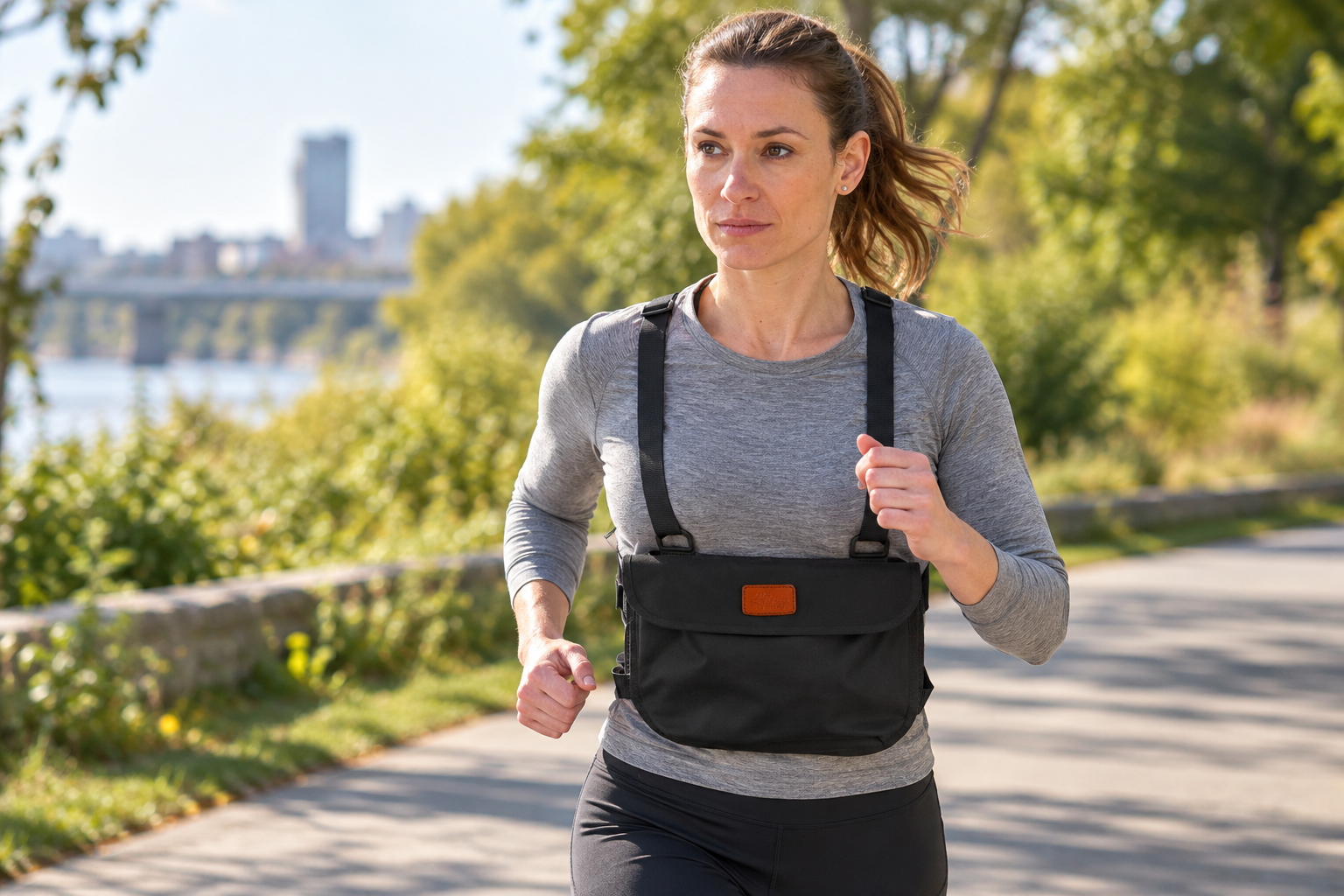
What Makes a Good Running Holster
A running holster has one job the rest depend on: it holds your pistol still and safe while your body is in constant motion. The best options cover the trigger guard, grip the gun so it will not shift, sit comfortably against sweaty skin, and let you reach the firearm fast when it counts.
Here is what to look for in the right holster:
- The holster should cover the trigger guard completely, since full coverage is what keeps anything from pressing the trigger while the gun is holstered.
- A secure fit keeps the pistol from bouncing, flipping, or working loose as your stride repeats thousands of times.
- Sweat-friendly, moisture-wicking materials matter because trapped sweat and friction are what turn a long run into a chafing problem.
- Quick access and easy access let you reach the gun without digging, which is the point of carrying in the first place.
- The carry position should match your body type, your clothing, and how far you plan to go.
The Best Running Holster: the Gunny Sack
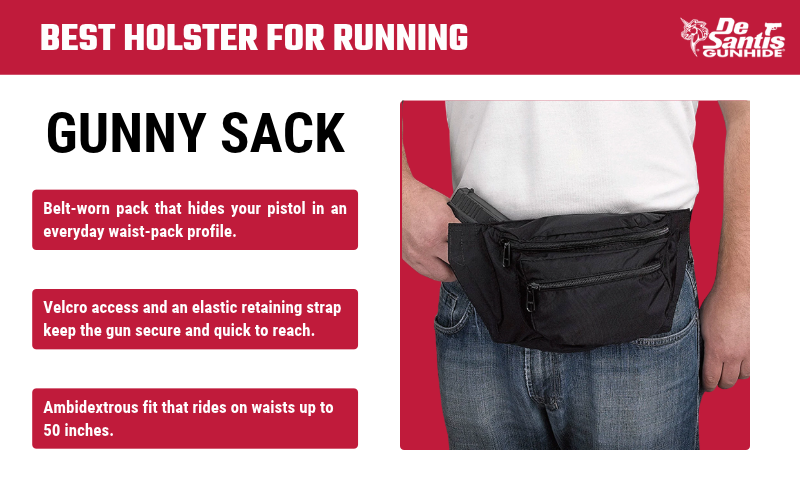
For most runners, the Gunny Sack is the holster to beat. It is a belt-worn pack that carries your pistol inside a profile that reads as an everyday waist pack, so the gun stays out of sight while you move. DeSantis has built the Gunny Sack family for decades, and it remains one of the most copied and imitated holster designs in the business.
The waist-pack design sidesteps the bounce and printing that trip up waistband carry on the run. Velcro access opens the pack fast, an elastic retaining strap holds the pistol steady so it will not shift as your stride repeats, and the ambidextrous build sets up for either hand. It fits a wide range of handguns across 16 manufacturers and rides on waists up to 50 inches, with a 12-inch belt extender available for a larger fit. At 11 by 5 by 1.5 inches and about half a pound, it keeps the weight low and out of the way on a long run.
More Ways to Carry on the Run
Not every run calls for a waist pack. A pocket holster or a slim IWB rig can be the better call depending on your gun, your pace, and your route. Here is how the main alternatives stack up against waist carry.
- The Nemesis is a pocket holster with a tacky outer surface that stays put when you draw, so your front or back pocket becomes a quick-access carry spot. It works best on a short run with a subcompact like an M&P Shield.
- Most IWB holsters ride inside the waistband on a belt and vanish under a shirt. An IWB holster or a belly band holster can cover a shorter run, though the bounce and sweat of a long run push many runners toward a waist option.
- An ankle holster suits a tiny backup gun, but the weight low on the leg can throw off your stride over distance.
You will also see general running gear pressed into service here. A running belt, a chest bag, or a dedicated kit bag from Hill People Gear can hold a smaller pistol, and a running vest or the Ultimate Direction utility belt leaves room for a soft flask and gels alongside it. The trade-off is that running gear rarely covers the trigger guard the way a real gun holster does, which is exactly where a purpose-built rig pulls ahead.
| Holster | Carry Position | Best For | Access |
|---|---|---|---|
| Gunny Sack | Waist pack on a belt | Long runs and a wide range of guns | Velcro, ambidextrous |
| Nemesis | Short runs with a subcompact | Pocket draw | |
| IWB holsters | Inside the waistband | Short runs under a shirt | Belt draw |
Dialing In the Rest of Your Kit
Carrying is one piece of running prepared. The rest comes down to water, the small stuff you bring, staying visible, and letting someone know where you are. A holster with an extra pocket, or a running belt beside it, keeps all of it within easy reach.
- On any run over an hour, bring water rather than counting on a water fountain to keep you going. A water bottle or soft flask tucked into your kit covers you on the long run.
- Stash the essentials you would carry anyway, including your phone, keys, ID, a credit card, and a couple of energy gels for longer efforts.
- Low light is the quiet danger, since most pedestrians killed in crashes are struck in the dark. Reflective gear and a headlamp belong in any early or late setup.
- Tell someone your route, vary it, and carry ID so help can find you and reach the right person if something goes wrong.
- Check the return policy before you commit, since fit is personal and the right holster is the one you will actually wear.
Run Ready, Every Mile
The miles feel safer when your carry setup disappears into your run instead of fighting it. The Gunny Sack covers most runners, the Nemesis fills the gap for pocket carry, and a slim IWB rig handles the short stuff. If you are still weighing carry styles, DeSantis breaks down how to choose the best concealed carry holster for you and match it to how you live and move.
Ready to gear up for your next run?
Browse the full lineup of DeSantis holsters and find the carry style that keeps pace with you.
